Even Before the Covid-19 Pandemic, Black Americans Were Dying More

Black Americans are dying from the novel coronavirus at a shockingly disproportionate rate. In majority-black counties, the Washington Post found, infection rates are triple that of majority-white counties. Deaths among Black Americans, meanwhile, are six times higher than that of whites.

Yet long before the pandemic, Black Americans have been dying at far higher rates than other Americans. They are victims of a longstanding epidemic of structural racism and unequal access to care. Unfortunately, the disparate impact of COVID-19 is only the latest chapter in an ongoing national tragedy, one that the virus has only brought into sharper relief.

Read more at Washington Monthly here.

Punishing Fathers for Being Poor

In 1965, the now-infamous “Moynihan Report,” authored by the late sociologist and senator Daniel Patrick Moynihan, blamed the “breakdown of the Negro Family” for high rates of child poverty and welfare dependency in that community. 

Moynihan’s analysis led to a slew of harsh policies aimed at cracking down on “deadbeat dads.” These policies, it turns out, not backfired but are based on false assumptions about low-income fathers.

I review  an important new volume by the scholars Paul Florsheim and David Moore, Lost and Found, that shows the complexities of low-income fatherhood and argues for a more constructive approach to helping poor fathers support their children.

Read more here

The Widening Racial Gap on Jobs and Wealth

Research from the Brookings Institution finds that Black workers hold a disproportionately large share of the economy’s lowest-paid jobs. Black Americans make up 15 percent of the 53 million Americans who earn less than two-thirds of the median wage (or less than $16.03 an hour). On average, these low earners earn a median of $10.22 an hour and $17,950 a year.

Black Americans cannot catch up to whites in accumulating wealth unless the quality of the jobs they hold—and the wages they earn—catch up first.

Read more here.

What White America Still Doesn’t Understand About Racism

In 2016, the median white household held roughly ten times the net wealth of the median black household; the average black worker earned 73 cents on the dollar compared to his or her white colleagues; and even among college graduates, blacks earned 20 percent less than their white counterparts. For decades, racial disparities in wealth and wages have been stark and enduring – and frustratingly impervious to change.

To many liberals, these inequities are the obvious legacy of slavery and decades of legalized discrimination, such as under Jim Crow. The substandard education to which black Americans have been relegated has meant fewer students succeed in school and in the workforce. Segregated housing, too, has left many people living in neighborhoods without access to good jobs, reliable public transportation, or quality health care.

These systematic inequalities are among the many destructive by-products of “structural” racism. But too many white Americans simply do not understand this as a phenomenon, argues a new report. Instead, they tend to see racism through the narrow prism of individual—not institutional—behavior.

This failure to grasp the systemic nature of racism today could explain why the nation hasn’t made as much progress as it should—and could—on racial equity.

Read more at Washington Monthly

How One White Mayor Wants to Heal the Racial Divide

In 2005, Hurricane Katrina struck the Gulf Coast as one of the worst storms in U.S. history. The Category Three hurricane killed 1,833 Americans across five states and caused an estimated $108 billion in property damage. It also laid bare the deep impacts of decades of segregation and institutionalized racism in the South.

The brunt of the devastation fell on the region’s low-income and minority residents, many of whom remain displaced to this day. In New Orleans, for instance, heavily African-American neighborhoods, such as the flood-prone Lower Ninth Ward, were wiped out while affluent white neighborhoods further inland were spared.

Many progressives hoped that the gross inequities exposed by Katrina would spur broad national action on racial equity, but progress has been disappointingly slow. An April 2019 poll by the Pew Research Center, for instance, found that 76 percent of black Americans say they’ve experienced discrimination or unfair treatment. And a stunning 58 percent of Americans think race relations are “generally bad”—with 69 percent think things are getting worse.

For former New Orleans Mayor Mitch Landrieu, the lessons of Katrina remain unfinished business that the nation needs to tackle.

Read more via Washington Monthly…

Still Missing: The Women Wonks

In August 2018, Mexico’s Ministry of Health convened a high-profile conference on the benefits of breastfeeding. It was part of a long-standing effort to boost the nation’s breastfeeding rate, among the lowest in Latin America. But what drew the most attention was a photo of the keynote panel: six dour men—presumably incapable of lactating themselves—arrayed under a banner reading “Uniendo esfuerzos por la Lactancia Maternal,” Spanish for “Joining Forces for Breastfeeding.” The photo sparked viral outrage on social media and instantly established the event as a prime example of all-male panels—also known as “manels,” “colloqui-hims,” or “him-posiums.” 

I first wrote about the preponderance of testosterone at think tank panels and policy events—particularly
in Washington—in a 2012 Washington Monthly article titled “Where Are the Women Wonks?” The imbalance is about more than appearances. “Without greater representation from women, maybe it’s not such a surprise that so many of the policy debates in Washington seem to be missing half the picture,” I wrote at the time.

Read more at Washington Monthly.

Are blue-collar white women Trump’s red wall?

Despite a nonstop onslaught of fresh and damning revelations about his misconduct in office, President Donald Trump has so far maintained his core supporters’ loyalty. As of the start of this week, Trump’s average approval rating holds at 42 percent—only slightly less than the share of Americans opposing the inquiry into his impeachment.

But for Democrats desperate to oust the president, either by impeachment or the ballot, breaching this “red wall” of support (if, in fact, it can be breached) is a matter of utmost importance. Democrats face two key questions: who are Trump’s most stalwart defenders, and can they be persuaded to abandon him?

New research suggests an answer to the first of these queries. It’s a group that Democrats should—and could—be winning over: blue-collar white women. While Democrats made crucial gains among these voters in the 2018 election, these women may now be rallying to Trump’s defense.

Continue reading at Washington Monthly.

Health care’s biggest problem is getting worse

Many liberals and a growing number of Democratic presidential candidates have embraced a bold idea for reforming America’s broken healthcare system. The idea most in vogue—and the most debated—throughout the 2020 election has been to abolish private insurance in favor of a government-run national system, otherwise known as “Medicare for All.” Advocates of “single-payer” generally blame rapacious insurers as the principal villains of the current system, responsible for sky-high premiums and out-of-pocket expenses. Replacing for-profit insurance companies with a government program, the logic goes, would bring lower costs and coverage to everyone

But this singular focus on insurers means that the presidential hopefuls are neglecting an even bigger problem with far-reaching consequences for millions of Americans: the dominance of hospital monopolies in a growing number of health care markets nationwide.

Monopolies, in general, mean bad news for consumers. Health care is no exception. Mounting evidence shows that hospital consolidation exacerbates the system’s worst failings, bringing higher prices, fewer choices, and lower quality care to patients. And it’s only getting worse.

Continue reading at Washington Monthly.

How 2020 Democrats are missing the message on the economy

The 2020 Democratic primary has seen no shortage of big, ambitious ideas—the nationalization of health care via “Medicare for All,” free college, free child care, and the cancellation of student debt, just to name a few.

But there’s one big idea still missing: how to fix the stark and growing disparities between the parts of the country that are prospering and those that are falling behind. Regional inequality is perhaps the greatest challenge to America’s economic and political future, but 2020 candidates have yet to tackle, let alone acknowledge, the problem. It’s an omission that could have long-term substantive consequences for Democrats.

Since President Donald Trump took office in 2016, numerous analyses have pointed to a widening gulf—political, economic and demographic—between red and blue America. On the one hand are the rising fortunes of educated, urban Democratic districts. On the other is the steep decline of formerly industrial, Republican districts in rural America and the heartland.

The latest to highlight this trend is a new report from Mark Muro and Jacob Whiton of the Brookings Institution, which underscores how deep this schism has become over the past 10 years.

Continue reading at Washington Monthly.

High on Pot Taxes

Originally published in Governing, September 2019

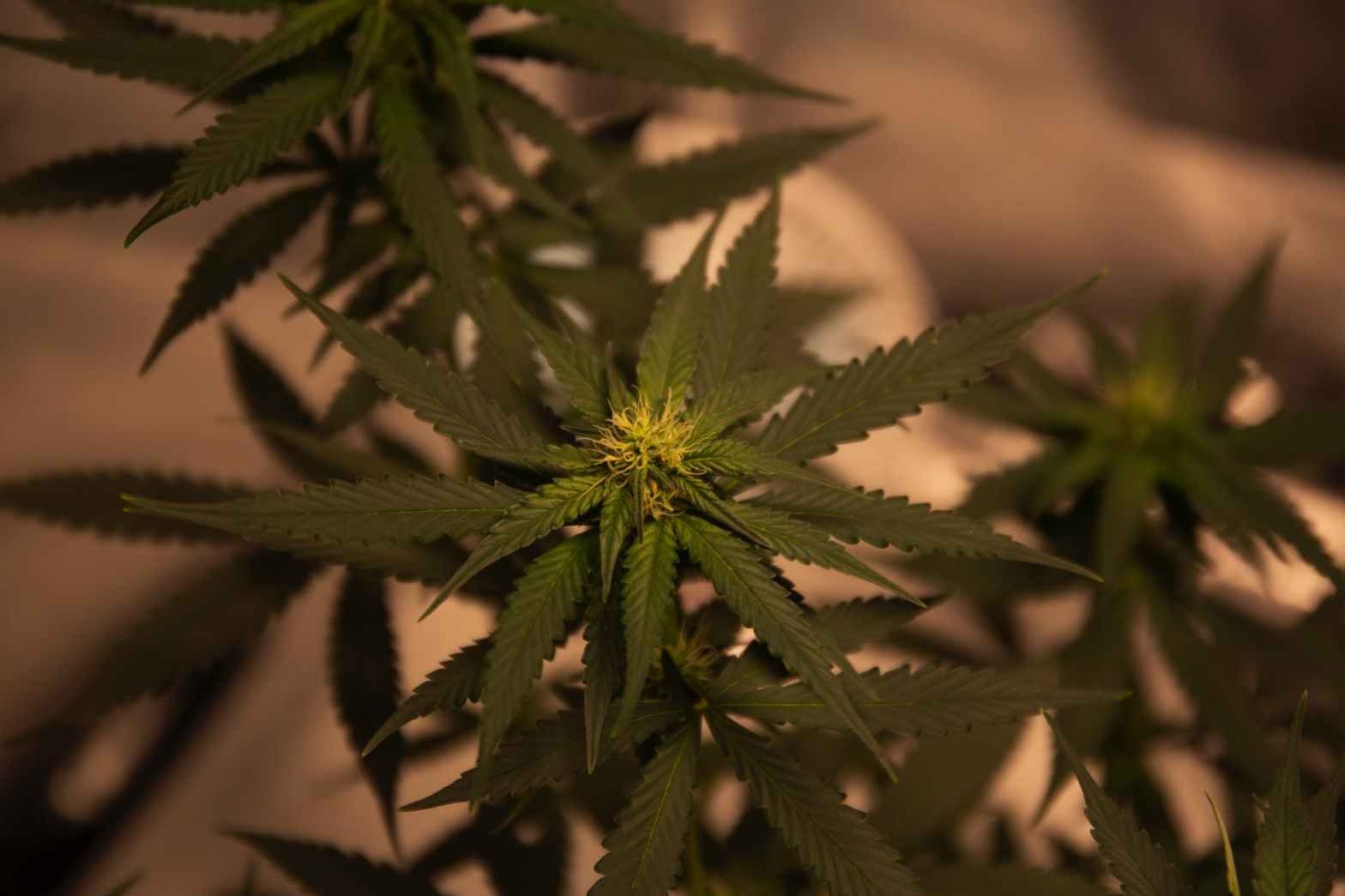
Visit the online menu of marijuana producer <rØØ7>, and you’ll glimpse the blossoming world of artisanal pot—a burgeoning industry made possible by states’ momentum toward legalization. Strains like Sweet and Sour Cindy offer “an earthy mix of grape, apricot and chocolate undertones,” while Millennium Kush consists of “tropical notes” and a “citrus aroma.” “We’re really about trying to promote wellness, whether it’s a straight medical use or de-stressing or whatever else,” says President Kris Krane of 4Front Ventures, <rØØ7>’s parent company.

Krane’s business is booming. He’ll be operating at least 15 stores in seven states by years’ end. Meanwhile, states are hoping his good fortune benefits their coffers as well. Legalization advocates have promised big potential tax revenues from pot sales. In Illinois, which legalized marijuana in June, a study predicted yearly revenues as high as $676 million. Early legalizer Colorado has reaped a windfall of more than $1 billion in total collections since 2014.

Nevertheless, states shouldn’t assume a guaranteed jackpot for their budgets. California collected $82 million in its first six months of sales, falling far short of projected revenues of $185 million. In Massachusetts, revenue officials projecting $63 million in taxes by June 2018 had collected a paltry $5.9 million as of that March. Even in Colorado, revenues may have plateaued, according to a market analysis commissioned by the Colorado Department of Revenue.

Why these disappointments? In California and Massachusetts, regulatory snafus delayed the licensing of stores and, consequently, tax collections. Massachusetts, for instance, had just nine licensed stores three months after legalization, while California had only 620 licensed stores statewide as of April 2019 (a tiny number considering the state’s estimated annual pot production of 14 million pounds).

While smarter regulation could help boost revenues, it can’t change pot’s shifting economics. Most of the nine states where recreational sales are currently legal impose excise taxes based on price, along with general sales taxes. (One exception is Alaska, which taxes retail sales by the ounce.) Sales and excise taxes work well when pot is relatively expensive, but as marijuana cultivation moves out of the shadows and into industrial-scale production, “you’re going to see the price come down and your taxes going down with it,” says marijuana tax policy expert Pat Oglesby.

In Colorado, for instance, the state’s market analysis reports that retail prices for cannabis fell 62 percent from 2014 to 2017. In Oregon, marijuana can now be had for as little as $60 an ounce, compared to $350 on the illegal market, according to Karen O’Keefe of the Marijuana Policy Project.

One way to grow revenues is to increase demand, but encouraging more pot consumption is hardly good public policy. As more states legalize, counting on out-of-state sales is also less viable. Colorado’s “cannabis tourism” accounts for less than 10 percent of sales. States could raise the tax rate or shift to taxing by weight—but face bitter industry opposition. “You can only wring so much out of this industry before you choke it,” says National Cannabis Industry Association spokesman Morgan Fox.

State-owned pot shops are still another option. They’re a long shot, but tax lawyer Oglesby favors them. “It’s like the government liquor store,” he says. “They can adjust the price immediately, they’re very good about keeping kids away, and they can keep the price where they want it.”

Cannabis Corner, in Stevenson, Wash., is so far the nation’s only city-owned pot store. Launched in 2015, the store expects sales of about $1.1 million this year.

But even with maximized revenue, pot taxes will likely only account for about 1 percent of overall state budgets, according to the Institute on Taxation and Economic Policy. The $266 million Colorado collected in 2018, for instance, pales next to the state’s $15 billion in total revenues and $32 billion budget.

The bottom line: States should legalize for public health and safety, not the money. Plugging budget holes with pot? It’s, well, a pipe dream.